
Introduction
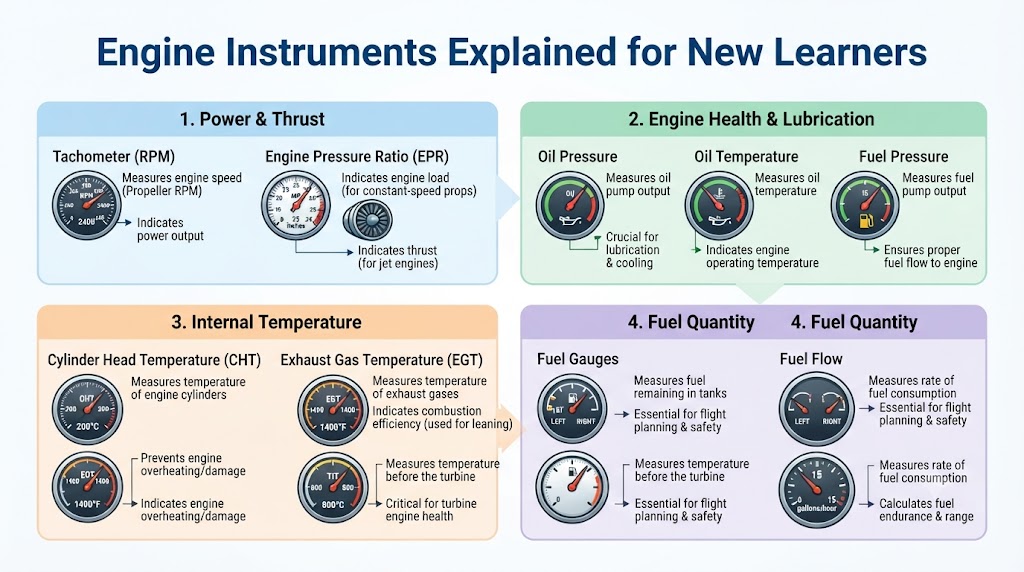
Aircraft engine instruments are some of the most important gauges in the cockpit. They help pilots understand how the engine is performing during start, taxi, takeoff, climb, cruise, descent, and landing.
For new aviation learners, these instruments may look confusing at first. But once you understand what each gauge shows, they become easier to read. This guide explains Engine Instruments Explained for New Learners in simple words so aviation students and beginner pilots can understand engine monitoring clearly.
What Are Engine Instruments in Aircraft?
Engine instruments are cockpit gauges or digital displays that show the condition and performance of the aircraft engine.
They help pilots monitor important information such as:
- Engine speed
- Oil pressure
- Oil temperature
- Fuel pressure
- Fuel quantity
- Engine temperature
- Electrical system condition
- Engine warnings
In older aircraft, these instruments may appear as round gauges. In modern aircraft, the same information may be shown on digital screens.
Why Engine Instruments Are Important for New Learners
Engine instruments are important because the engine must operate safely throughout the flight. If the engine develops a problem, the instruments may show warning signs before the situation becomes serious.
These instruments help pilots:
- Detect engine problems early
- Monitor fuel status
- Check engine temperature
- Confirm normal oil pressure
- Manage engine power
- Follow checklist procedures
- Improve cockpit awareness
New learners should understand that engine instruments are not only for aircraft mechanics. Pilots also need to read them regularly during flight.
Main Engine Instruments Found in Aircraft
Different aircraft may have different engine instruments, but many training aircraft include common gauges.
The main engine instruments include:
- RPM gauge or tachometer
- Oil pressure gauge
- Oil temperature gauge
- Fuel pressure gauge
- Fuel quantity indicator
- Cylinder head temperature gauge
- Exhaust gas temperature gauge
- Manifold pressure gauge
- Ammeter or voltmeter
- Engine warning lights
Each instrument gives a different piece of information about the aircraft engine or related systems.
RPM Gauge or Tachometer Explained
The RPM gauge, also called the tachometer, shows how fast the engine crankshaft is rotating. RPM means revolutions per minute.
In simple words, it tells how fast the engine is running.
Pilots use the RPM gauge during:
- Engine start
- Taxi
- Run-up checks
- Takeoff
- Climb
- Cruise
- Descent
During takeoff, the pilot checks that the engine reaches the expected RPM. If the RPM is too low, it may indicate an engine performance problem.
During cruise, pilots may reduce RPM to manage power, fuel use, and engine wear.
Oil Pressure Gauge Explained
Oil pressure is very important for engine health. Aircraft engines need oil to lubricate moving parts and reduce friction.
The oil pressure gauge shows whether oil is moving through the engine properly.
If oil pressure is too low, engine parts may not receive enough lubrication. This can cause serious engine damage.
If oil pressure is too high, it may also indicate a problem, especially in cold conditions or if there is a blockage.
Pilots check oil pressure immediately after engine start. If oil pressure does not rise within the required time, the engine should be shut down according to checklist procedures.
Oil Temperature Gauge Explained
The oil temperature gauge shows how hot the engine oil is.
Oil must be warm enough to flow properly, but not too hot. If oil is too cold, it may not lubricate the engine effectively. If oil is too hot, it may lose its ability to protect engine parts.
During engine warm-up, pilots monitor oil temperature before applying high power.
During climb, oil temperature may increase because the engine is producing more power. If the temperature rises too much, the pilot may need to adjust power, mixture, or climb speed according to aircraft procedures.
Fuel Pressure and Fuel Quantity Indicators
Fuel instruments help pilots understand fuel supply and fuel availability.
Fuel Pressure Gauge
The fuel pressure gauge shows whether fuel is being delivered to the engine at the correct pressure.
Low fuel pressure may indicate a fuel pump issue, fuel blockage, or low fuel supply. High fuel pressure may also indicate a system problem.
Fuel Quantity Indicator
The fuel quantity indicator shows how much fuel is in the tanks.
New learners should remember that fuel gauges are important, but pilots should not depend only on them. Good fuel planning is also required before flight.
Pilots calculate fuel needs before departure and monitor fuel during flight.
Cylinder Head Temperature and Exhaust Gas Temperature
Some aircraft have temperature instruments that help pilots monitor engine heat and combustion.
Cylinder Head Temperature
Cylinder Head Temperature, or CHT, shows the temperature of the engine cylinder heads.
High CHT may indicate that the engine is running too hot. This can happen during long climbs, high power operation, or poor cooling airflow.
Exhaust Gas Temperature
Exhaust Gas Temperature, or EGT, shows the temperature of gases leaving the engine.
Pilots may use EGT to help adjust the fuel-air mixture. Correct mixture control can improve engine performance and fuel efficiency.
For beginners, the key point is simple: CHT and EGT help pilots understand engine temperature and combustion condition.
Manifold Pressure Gauge Explained
A manifold pressure gauge shows pressure inside the engine intake manifold. It is commonly found in aircraft with constant-speed propellers or more advanced piston engines.
In simple words, manifold pressure helps pilots manage engine power.
A higher manifold pressure usually means more engine power. A lower manifold pressure usually means less engine power.
New learners may not see this gauge in every basic training aircraft, but it becomes important when learning advanced aircraft operations.
Electrical System Instruments
Aircraft also have instruments that show the condition of the electrical system.
Ammeter
An ammeter shows whether the battery is charging or discharging.
If the ammeter shows a discharge during flight, it may mean the alternator is not supplying enough electrical power.
Voltmeter
A voltmeter shows electrical voltage in the aircraft system.
Low voltage may indicate battery or alternator problems. Since many cockpit instruments, radios, and lights depend on electricity, pilots must monitor electrical indications carefully.
Engine Warning Lights
Some aircraft have engine warning lights or alerts. These lights may warn about low oil pressure, high temperature, alternator failure, or other system problems.
New learners should understand that warning lights must never be ignored. A warning light means the pilot should follow the checklist and take action based on training and aircraft procedures.
Engine Instruments During Different Flight Phases
Pilots monitor engine instruments throughout the flight.
Pre-Flight Checks
Before starting the engine, pilots check fuel quantity, oil level, and visible engine condition.
Engine Start
After engine start, oil pressure is checked immediately. The pilot also watches RPM and engine behavior.
Taxi
During taxi, pilots monitor engine smoothness, RPM, oil temperature, and other basic indications.
Run-Up
Before takeoff, pilots perform engine run-up checks. This helps confirm that the engine is ready for flight.
Takeoff
During takeoff, pilots check that RPM, oil pressure, oil temperature, and fuel pressure are in normal ranges.
Climb
During climb, pilots monitor engine temperature and power settings because the engine is working harder.
Cruise
During cruise, pilots monitor RPM, fuel, oil pressure, oil temperature, and engine smoothness.
Descent
During descent, power is reduced, but pilots still monitor engine instruments to avoid abnormal indications.
Approach and Landing
During approach, pilots keep checking the engine condition because power changes may be needed quickly.
Shutdown
After landing, pilots follow shutdown procedures and may note any abnormal readings for maintenance.
Normal, Caution, and Danger Ranges
Many engine gauges use color markings to help pilots understand readings quickly.
Green Range
The green range usually means normal operating range. Pilots want most engine readings to stay in this area during normal flight.
Yellow Range
The yellow range means caution. The engine may be operating near a limit. Pilots should monitor carefully and follow procedures.
Red Range
The red range means danger or operating limit. A reading in the red range may require immediate action.
These color markings help pilots identify problems quickly, especially during busy flight phases.
Common Mistakes New Learners Make With Engine Instruments
New learners may make mistakes while learning engine instruments.
Ignoring Gauges After Takeoff
Some students focus only on flying the aircraft and forget to monitor engine instruments after takeoff.
Not Noticing Abnormal Readings
Beginners may not yet know what normal readings look like, so abnormal readings can be missed.
Depending Only on Warning Lights
Warning lights are helpful, but pilots should also scan the gauges regularly.
Misunderstanding Fuel Quantity
Fuel gauges must be checked, but fuel planning and visual checks are also important before flight.
Forgetting Engine Warm-Up
Applying high power before the engine is properly warmed may not be good for engine health.
Poor Cockpit Scan
A weak scan can cause pilots to miss changes in oil pressure, temperature, RPM, or fuel pressure.
Safety Tips for Reading Engine Instruments
New learners should build good engine monitoring habits early.
Helpful safety tips include:
- Check engine gauges regularly
- Learn normal readings for the training aircraft
- Follow checklist procedures
- Report abnormal indications early
- Cross-check related instruments
- Never ignore warning lights
- Listen for unusual engine sounds
- Monitor fuel throughout the flight
- Ask the instructor when a reading is unclear
Safe pilots do not wait for serious problems. They notice small signs early.
Real-Life Example for New Learners
Imagine a student pilot starts the engine during a training flight. After start, the instructor asks, “What is the oil pressure?”
The student checks the oil pressure gauge and confirms that it has entered the normal green range. This tells both the student and instructor that oil is circulating properly.
Now imagine the oil pressure does not rise. In that case, the correct action is not to continue. The pilot must follow the checklist and shut down the engine if required.
This example shows why engine instruments are checked from the first moments of engine operation.
Why Engine Instrument Practice Builds Better Pilot Skills
Regular practice with engine instruments helps new learners become more confident and responsible pilots.
It improves:
- Cockpit discipline
- Aircraft systems knowledge
- Early problem detection
- Fuel awareness
- Checklist discipline
- Safety decision-making
- Confidence during training flights
The more students understand engine instruments, the better they can monitor aircraft health during flight.
FAQs About Engine Instruments
1. What are engine instruments in aircraft?
Engine instruments are cockpit gauges or displays that show engine performance, fuel status, oil pressure, oil temperature, and other important engine information.
2. Why are engine instruments important for new pilots?
They help new pilots monitor engine health, detect problems early, manage fuel, and follow safe flight procedures.
3. What does the RPM gauge show?
The RPM gauge shows how fast the engine is rotating in revolutions per minute.
4. Why is oil pressure important in an aircraft engine?
Oil pressure shows whether oil is circulating properly through the engine. Low oil pressure can indicate a serious problem.
5. What does oil temperature indicate?
Oil temperature shows how hot the engine oil is. It helps pilots know whether the engine is warming up, operating normally, or overheating.
6. What is the difference between fuel pressure and fuel quantity?
Fuel pressure shows whether fuel is being delivered to the engine correctly. Fuel quantity shows how much fuel is in the tanks.
7. What do CHT and EGT mean in aviation?
CHT means Cylinder Head Temperature. EGT means Exhaust Gas Temperature. Both help monitor engine heat and performance.
8. What is manifold pressure?
Manifold pressure shows pressure inside the engine intake system and helps pilots manage engine power in some aircraft.
9. What do green, yellow, and red gauge markings mean?
Green usually means normal range, yellow means caution, and red means limit or danger.
10. How can new learners practice reading engine instruments?
They can practice during pre-flight lessons, engine start, simulator sessions, run-up checks, and instructor-guided cockpit training.
Final Thoughts
Engine Instruments Explained for New Learners is an important topic for every aviation student. Engine instruments help pilots monitor engine speed, oil pressure, oil temperature, fuel condition, engine heat, electrical system status, and warning indications.
At first, these gauges may look technical. But with simple understanding and regular practice, new learners can read them with confidence.
A good pilot does not only fly the aircraft. A good pilot also monitors the engine carefully and responds early to abnormal signs.

