
Introduction
Electric aircraft are shaping the next major transformation in the aviation industry. As global demand for sustainable transport grows, aviation is moving toward cleaner and more efficient technologies. Electric aircraft represent a future where flying becomes quieter, more environmentally friendly, and less dependent on fossil fuels.
Unlike traditional aircraft that rely on jet fuel or aviation gasoline, electric aircraft use electric motors powered by batteries or hybrid energy systems. This innovation is not just an upgrade in propulsion—it is a complete shift in how aircraft are designed, powered, and operated. From small training aircraft to advanced air taxis, electric aviation is paving the way for a new era of flight.
What is an Electric Aircraft?
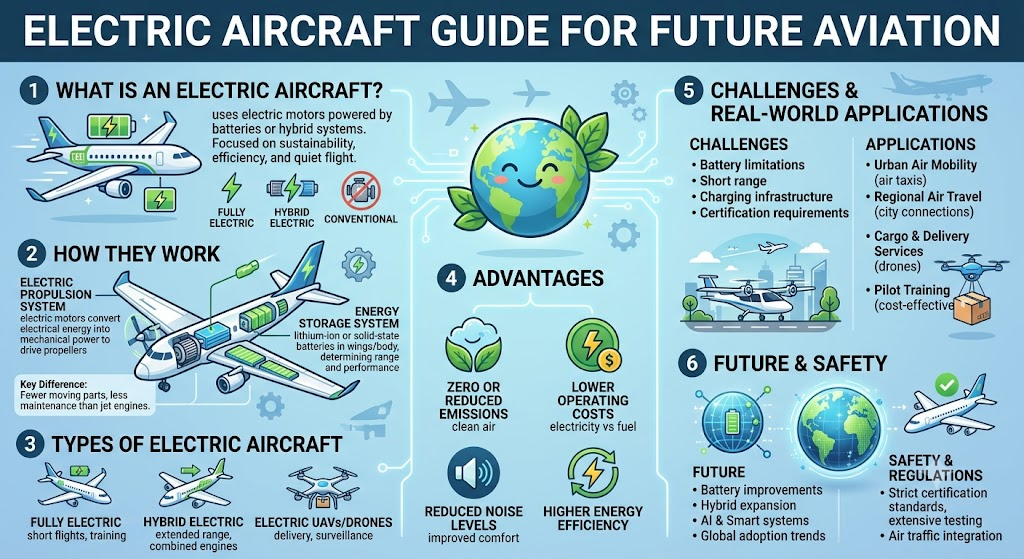
An electric aircraft is an airplane that uses electric propulsion instead of conventional fuel-based engines. These aircraft are powered by energy stored in batteries, fuel cells, or hybrid systems.
Types of Aircraft Power Systems
- Fully Electric Aircraft: Operate entirely on battery-powered electric motors
- Hybrid Electric Aircraft: Combine fuel engines with electric propulsion systems
- Conventional Aircraft: Use jet fuel or aviation gasoline for combustion engines
Electric aircraft focus on reducing emissions, improving efficiency, and lowering operating costs while maintaining safe flight operations.
How Electric Aircraft Work
Electric aircraft operate using a simpler mechanical structure compared to traditional aircraft.
Electric Propulsion System
Electric motors convert electrical energy into rotational force, which drives propellers or fans to generate thrust.
Energy Storage System
Most electric aircraft rely on lithium-ion batteries or emerging solid-state batteries to store energy. These batteries determine the aircraft’s range and performance.
Key Difference from Jet Engines
- Jet engines burn fuel to create thrust through combustion
- Electric motors use stored electricity to produce mechanical power
- Electric systems have fewer moving parts and require less maintenance
This makes electric aircraft more efficient but currently limited by battery energy density.
Types of Electric Aircraft
Electric aviation is developing in multiple categories based on usage and technology.
Fully Electric Aircraft
These aircraft operate only on electric power and are mainly used for short-distance flights and pilot training.
Hybrid Electric Aircraft
Hybrid systems combine traditional engines with electric motors to extend range and improve fuel efficiency.
Electric UAVs and Drones
Unmanned aerial vehicles powered by electricity are widely used in delivery services, surveillance, agriculture, and mapping.
Advantages of Electric Aircraft
Electric aircraft bring several important benefits that support the future of sustainable aviation.
Zero or Reduced Emissions
They significantly reduce greenhouse gas emissions, supporting environmental sustainability goals.
Lower Operating Costs
Electric power is cheaper than aviation fuel, reducing long-term flight costs.
Reduced Noise Levels
Electric motors produce much less noise compared to jet engines, improving passenger comfort and urban compatibility.
Higher Energy Efficiency
Electric propulsion systems convert energy more efficiently into thrust than combustion engines.
Challenges and Limitations
Despite their advantages, electric aircraft still face technical and operational challenges.
Battery Limitations
Current batteries are heavy and store limited energy, restricting flight range.
Short Flight Range
Most electric aircraft are suitable only for short-haul or regional flights.
Charging Infrastructure
Airports need new charging systems and energy networks to support electric fleets.
Certification Requirements
Aviation authorities must develop new safety and certification standards for electric propulsion systems.
Real-World Applications
Electric aircraft are already being tested and gradually introduced in various sectors.
Urban Air Mobility
Electric air taxis are being developed for short-distance city travel.
Regional Air Travel
Electric aircraft can connect nearby cities more efficiently and sustainably.
Cargo and Delivery Services
Electric drones are widely used for logistics and last-mile delivery.
Pilot Training
Electric training aircraft are cost-effective and environmentally friendly for flight schools.
Future of Electric Aviation
Electric aviation is expected to grow rapidly with continuous technological advancements.
Battery Technology Improvements
Next-generation batteries like solid-state technology will improve energy storage and range.
Hybrid Aircraft Expansion
Hybrid systems will help bridge the gap between traditional aviation and fully electric flight.
AI and Smart Flight Systems
Artificial intelligence will optimize flight paths, energy use, and aircraft performance.
Global Adoption Trends
Governments and airlines are investing heavily in electric aviation research and infrastructure.
Safety and Regulations
Safety remains a top priority in the development of electric aircraft.
Certification Standards
Electric aircraft must pass strict aviation safety regulations before commercial operation.
Testing and Validation
Extensive testing ensures reliability, safety, and performance under different conditions.
Air Traffic Integration
Electric aircraft must be safely integrated into existing air traffic management systems.
FAQs
1. What is an electric aircraft?
An electric aircraft is a plane powered by electric motors instead of traditional fuel engines, using batteries or hybrid systems for energy.
2. Are electric aircraft safe?
Yes, electric aircraft are designed under strict aviation safety standards and undergo extensive testing before approval.
3. How far can electric aircraft fly?
Currently, most electric aircraft are suitable for short-distance flights, but future battery improvements are expected to increase range significantly.
4. What powers electric aircraft?
They are powered by rechargeable batteries, fuel cells, or hybrid energy systems depending on the aircraft design.
5. Will electric aircraft replace conventional planes?
Not immediately. They will first be used for short-haul routes and gradually expand as technology improves.
6. What are hybrid electric aircraft?
Hybrid electric aircraft use both fuel-based engines and electric motors to improve efficiency and extend flight range.
7. What is the biggest challenge in electric aviation?
The biggest challenge is improving battery energy density while reducing weight.
8. Are electric aircraft environmentally friendly?
Yes, they significantly reduce emissions and help promote sustainable aviation.
Conclusion
Electric aircraft represent a major step forward in the evolution of aviation. By replacing traditional fuel-based engines with electric propulsion systems, they offer a cleaner, quieter, and more efficient way to fly. While challenges such as limited battery capacity and infrastructure development still exist, ongoing technological advancements are rapidly addressing these issues.
In the coming years, electric aviation is expected to play a key role in urban air mobility, regional transportation, and sustainable aerospace innovation. As the industry evolves, electric aircraft will become an essential part of the global aviation ecosystem, leading the way toward a greener and smarter future of flight.
#ElectricAircraft, #FutureOfAviation, #GreenAviation, #AerospaceTechnology, #Aircrafto

