
Introduction
Hybrid aircraft are becoming a key part of the future of aviation, combining traditional fuel-based propulsion with modern electric systems. As the aviation industry moves toward sustainability, efficiency, and reduced carbon emissions, hybrid aircraft are emerging as an important bridge between conventional aviation and fully electric flight.
For aviation students, this topic is especially important because it explains how future aircraft will be designed and operated. Understanding hybrid propulsion helps learners build a strong foundation in modern aerospace technology and prepares them for upcoming industry changes.
What is a Hybrid Aircraft?
A hybrid aircraft is an aircraft that uses two power sources for propulsion: a conventional fuel engine and an electric motor system. These two systems work together to improve efficiency, reduce fuel consumption, and optimize performance during different phases of flight.
Hybrid vs Electric vs Conventional Aircraft
Hybrid Aircraft: Use both fuel engines and electric motors
Electric Aircraft: Fully powered by electricity stored in batteries
Conventional Aircraft: Powered only by jet fuel or aviation gasoline
Hybrid aircraft act as a transition technology between fossil-fuel aviation and fully electric aviation.
How Hybrid Aircraft Work
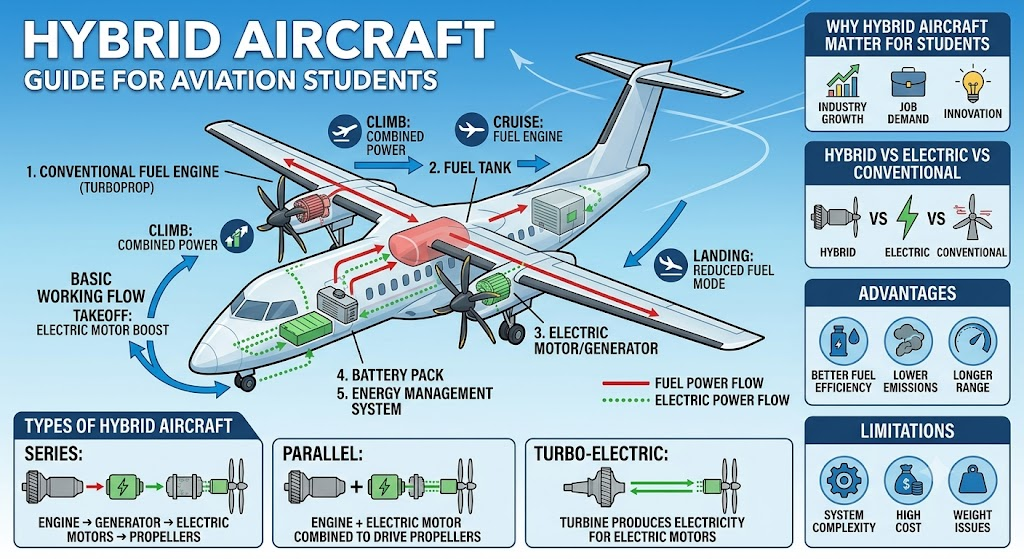
Hybrid aircraft operate by intelligently combining two propulsion systems that share workload depending on flight requirements.
Dual Propulsion System
The fuel engine provides sustained power for cruising, while electric motors assist during takeoff, climb, or low-speed operations.
Energy Management System
A control system distributes power between electric and fuel sources based on efficiency and flight conditions.
Basic Working Flow
Takeoff: Electric motor provides extra thrust support
Climb: Both systems work together for efficiency
Cruise: Fuel engine handles most of the power
Landing: Electric system supports reduced fuel usage
This combination improves performance while reducing environmental impact.
Types of Hybrid Aircraft
Hybrid aircraft are designed in different configurations depending on how the power systems interact.
Series Hybrid System
The engine generates electricity, which then powers electric motors that drive the propellers.
Parallel Hybrid System
Both the fuel engine and electric motor directly contribute to propulsion.
Turbo-Electric Hybrid System
A turbine engine produces electricity that powers electric motors for thrust generation.
Each system offers different levels of efficiency, complexity, and performance benefits.
Advantages of Hybrid Aircraft
Hybrid aircraft provide several important benefits for modern aviation development.
Better Fuel Efficiency
They reduce fuel consumption by optimizing power distribution between engine and motor.
Lower Emissions
Hybrid systems significantly reduce carbon emissions compared to traditional aircraft.
Longer Range Than Electric Aircraft
They overcome the range limitations of fully electric aircraft by using fuel support.
Operational Flexibility
Pilots can rely on different power modes depending on flight conditions.
Limitations of Hybrid Aircraft
Despite their advantages, hybrid aircraft still face several challenges.
System Complexity
Combining two propulsion systems increases engineering and maintenance complexity.
High Development Cost
Research, testing, and certification require significant investment.
Weight Issues
Batteries and hybrid components increase overall aircraft weight.
Limited Commercial Availability
Most hybrid aircraft are still in testing or early development stages.
Real-World Applications
Hybrid aircraft technology is being explored across several aviation sectors.
Regional Passenger Flights
Ideal for short and medium-haul routes where fuel efficiency is critical.
Cargo Transport
Helps reduce operational costs in logistics and freight services.
Military Aviation
Provides flexibility and efficiency for tactical and transport missions.
Training Aircraft
Useful for pilot training due to lower fuel usage and modern systems.
Why Hybrid Aircraft Matter for Aviation Students
For aviation students, hybrid aircraft represent the future of aerospace careers.
Industry Growth Opportunity
Aviation companies are investing heavily in hybrid and electric propulsion systems.
Strong Engineering Foundation
Understanding hybrid systems builds core knowledge in modern aircraft design.
Future Job Demand
Skilled professionals in hybrid aviation will be in high demand.
Exposure to Innovation
Students gain insight into real-world sustainable aviation technologies.
Future of Hybrid Aviation
Hybrid aircraft will play a major role in the transition to sustainable aviation.
Shift Toward Electrification
Hybrid systems will gradually evolve into fully electric aircraft.
Artificial Intelligence Integration
AI will optimize energy usage and flight efficiency.
Sustainable Aviation Fuel Usage
Future hybrid systems may integrate cleaner fuels for reduced emissions.
Global Expansion
Airlines and manufacturers are increasingly investing in hybrid aviation projects.
FAQs
- What is a hybrid aircraft?
A hybrid aircraft uses both a fuel engine and an electric motor system to power flight operations more efficiently.
- How does a hybrid aircraft work?
It combines fuel and electric propulsion systems, using each one depending on flight phases like takeoff, cruise, and landing.
- Are hybrid aircraft currently used?
Yes, they are in testing and early development stages, with growing interest from aerospace companies.
- What is the main benefit of hybrid aircraft?
The main benefit is improved fuel efficiency with reduced emissions compared to traditional aircraft.
- What is the difference between hybrid and electric aircraft?
Hybrid aircraft use both fuel and electricity, while electric aircraft rely only on battery-powered systems.
- Are hybrid aircraft expensive?
Yes, they are currently expensive due to advanced technology and development requirements.
- Do hybrid aircraft reduce pollution?
Yes, they significantly reduce carbon emissions by optimizing fuel usage.
- Why are hybrid aircraft important for students?
They help students understand future aviation technologies and prepare for industry advancements.
Conclusion
Hybrid aircraft are an important step in the evolution of aviation technology. By combining traditional fuel engines with electric propulsion systems, they offer improved efficiency, reduced emissions, and better operational flexibility. While still in development, they represent a crucial transition toward fully sustainable aviation.
For aviation students, learning about hybrid aircraft is essential for building a strong foundation in modern aerospace systems. As the industry continues to evolve, hybrid technology will play a key role in shaping future aircraft design, operations, and career opportunities in aviation.

