
Introduction
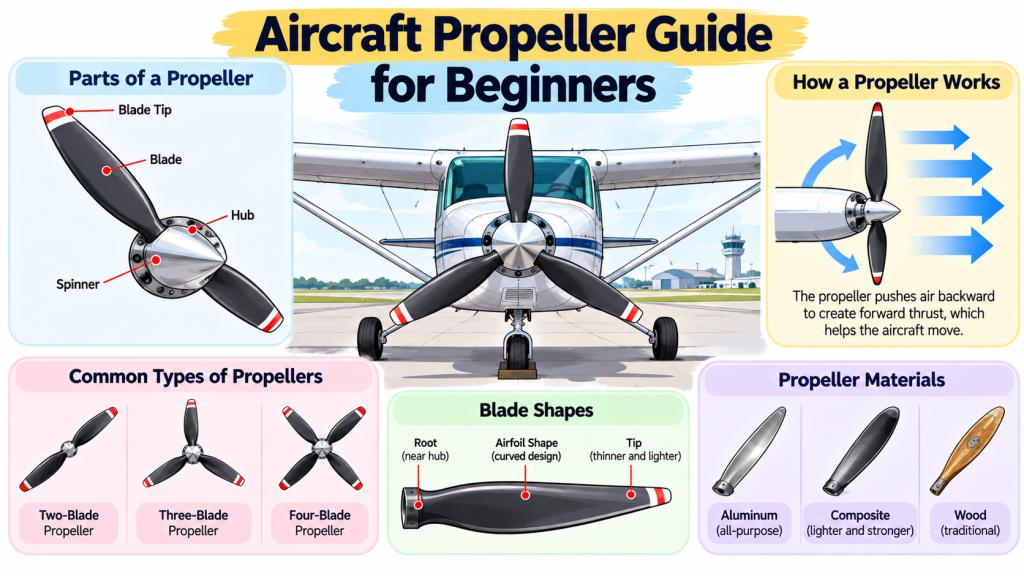
An aircraft propeller helps turn engine power into forward thrust. It looks simple, but it plays a key role in flight. Propeller design can affect speed, climb, fuel use, and engine performance. Beginners can understand propellers by learning their parts, types, pitch, and basic operation.
What Is an Aircraft Propeller?
An aircraft propeller is a rotating device that produces thrust. It connects to an aircraft engine through a shaft or related drive system. When the engine turns the propeller, its blades move through the air.
The blades have a special shape. This shape helps them create a force that moves air backward. The aircraft then moves forward because of this action.
Many small aircraft use propeller systems. Training aircraft, private aircraft, utility aircraft, and some transport aircraft use them.
Propellers can look similar from the outside. However, their design can vary greatly. Aircraft designers select a propeller based on the engine and aircraft requirements.
How Does an Aircraft Propeller Work?
A propeller works by using engine rotation to produce thrust. The basic process is easy to understand.
First, the engine produces power. The engine sends this power to the propeller. The propeller then rotates around its central hub.
As the blades rotate, they move through the air. Each blade has an airfoil-like shape. This shape creates aerodynamic forces as the blade moves.
The propeller pushes air backward. This action produces thrust in the forward direction.
Several factors affect this process. These include blade shape, blade angle, engine speed, aircraft speed, and air density.
The pilot and aircraft systems must keep these factors within suitable limits. This helps the propeller and engine work together properly.
Main Parts of an Aircraft Propeller
A propeller has several important parts. Each part has a specific role.
Propeller Hub
The hub sits at the center of the propeller. It connects the blades to the aircraft’s rotating system.
The hub transfers engine power to the blades. Its design depends on the propeller type and aircraft system.
Propeller Blades
The blades create the aerodynamic forces that produce thrust. Their shape and angle strongly affect propeller performance.
Different aircraft use different blade designs. Designers select these designs based on the aircraft’s needs.
Blade Root
The blade root connects the blade to the hub. It must handle significant loads during operation.
Blade Tip
The blade tip forms the outer end of each blade. It travels through the air at high speed during rotation.
The tip design can affect noise and aerodynamic performance.
Leading Edge
The leading edge meets the air first as the blade moves through its rotation. It can face wear from normal operation and airborne particles.
Trailing Edge
The trailing edge follows the leading edge through the air. It forms the rear part of the blade’s aerodynamic profile.
Spinner
The spinner covers the central area around the propeller hub on many aircraft. It helps provide a smooth airflow around the hub area.
Types of Aircraft Propellers
Aircraft use different propeller designs for different needs.
Fixed-Pitch Propellers
A fixed-pitch propeller keeps the same blade angle during normal operation. The pilot cannot change the blade angle during flight.
This design has a simple operating system. Many training and light aircraft use fixed-pitch propellers.
The fixed blade angle provides a compromise between different flight conditions. It may work well for the aircraft’s intended operating range.
Variable-Pitch Propellers
A variable-pitch propeller allows the blade angle to change.
The system can adjust the blades for different flight conditions. This can help the engine and propeller work more efficiently across a wider range of operations.
Variable-pitch systems use additional mechanical or hydraulic components. This makes them more complex than fixed-pitch systems.
Constant-Speed Propellers
A constant-speed propeller can automatically adjust blade pitch to help maintain a selected engine RPM.
The pilot selects an appropriate RPM. The propeller control system then changes blade pitch as needed.
This system can provide useful control during different phases of flight. It also requires pilots to understand the correct operating procedures.
Two-Blade Propellers
Two-blade propellers are common on many smaller aircraft.
They can offer a relatively simple design. Aircraft designers consider factors such as aircraft size, engine power, weight, and performance when selecting the blade count.
Three-Blade Propellers
Three-blade propellers use three blades around the hub.
They can provide different performance and noise characteristics compared with two-blade designs. They may also suit aircraft that need a particular balance between performance, clearance, and propeller size.
Four-Blade Propellers
Four-blade propellers use four blades.
They can support certain aircraft and engine combinations. Their use depends on the aircraft design and performance requirements.
More blades do not automatically mean better performance. Engineers must match the propeller to the complete aircraft system.
Fixed-Pitch vs Variable-Pitch Propellers
The main difference involves blade angle.
A fixed-pitch propeller keeps its blade angle set. A variable-pitch propeller can change its blade angle during operation.
Fixed-pitch systems usually have a simpler design. Variable-pitch systems provide more control over propeller operation.
A fixed-pitch propeller suits many light aircraft. A variable-pitch system can suit aircraft that operate across a wider range of flight conditions.
Neither system works best for every aircraft. Engineers choose the design based on engine power, aircraft weight, mission, speed, and other factors.
What Is Propeller Pitch?
Propeller pitch describes the blade angle and its relationship with the air.
You can think of pitch in a simple way. A low-pitch setting generally uses a smaller blade angle. A high-pitch setting uses a larger blade angle.
A low-pitch setting can help the engine reach higher RPM. This can support conditions such as takeoff when the aircraft needs strong acceleration.
A higher-pitch setting can suit faster flight conditions. The exact effect depends on the propeller, engine, aircraft, and operating conditions.
Propeller pitch does not simply mean aircraft speed. It describes a key part of how the blade interacts with the air.
What Is a Constant-Speed Propeller?
A constant-speed propeller helps maintain a selected engine RPM.
The pilot selects an engine speed using the aircraft’s controls. A governing system then adjusts blade pitch.
When conditions change, the system can increase or decrease blade pitch. This helps keep engine speed near the selected value.
For example, aircraft speed changes during different flight phases. The propeller may need a different blade angle to maintain the desired engine speed.
Pilots need proper training before operating aircraft with constant-speed propellers. They must follow the aircraft flight manual and approved procedures.
Two-Blade vs Three-Blade Propellers
Two-blade and three-blade propellers can serve different aircraft needs.
A two-blade propeller has fewer blades and a relatively simple layout. A three-blade propeller distributes the engine’s power across three blades.
Designers consider many factors when selecting between them. These include engine power, aircraft size, noise, vibration, weight, ground clearance, and performance.
A three-blade design may allow designers to manage propeller diameter and other design limits. A two-blade design may suit aircraft with different requirements.
The right choice depends on the complete aircraft system. Blade count alone cannot determine performance.
Propeller Materials
Aircraft propellers can use different materials. Common choices include wood, aluminum alloys, and composite materials.
Wood
Wooden propellers have a long history in aviation. They can provide a suitable combination of strength and weight when properly designed and maintained.
Modern aircraft use them less often than many other propeller materials.
Aluminum
Aluminum alloy propellers became common on many aircraft. Aluminum offers useful strength and relatively low weight.
Manufacturers can produce aluminum propellers in different designs for various aircraft.
Composite Materials
Modern propellers may use composite materials. These materials can include combinations of fibers and resins.
Composite designs allow engineers to create complex blade shapes. They can also provide useful weight and aerodynamic characteristics.
Each material needs suitable inspection and maintenance procedures.
How Propellers Affect Aircraft Performance
Propeller design can influence several areas of aircraft performance.
Takeoff
The propeller must produce suitable thrust during takeoff. Engine power and blade pitch both affect this process.
Climb
A suitable propeller can help the aircraft convert engine power into useful thrust during climb.
Cruise Speed
Propeller design also affects cruise performance. Engineers select the propeller based on the aircraft’s expected operating range.
Engine RPM
Propeller pitch affects the load placed on the engine. This can influence engine RPM during flight.
Fuel Efficiency
Propeller efficiency can affect how effectively the aircraft uses engine power. However, fuel use also depends on many other factors.
Noise and Vibration
Propeller design can affect aircraft noise and vibration. Blade shape, balance, engine operation, and other factors all play a role.
Aircraft performance never depends on the propeller alone. Engine power, aircraft weight, weather, altitude, and aircraft design also matter.
Propeller Maintenance and Inspection
A propeller operates under significant aerodynamic and mechanical loads. Regular inspection therefore plays an important role in aircraft safety.
Maintenance professionals may check the propeller for visible damage, corrosion, cracks, erosion, and other problems.
They may also examine the hub, blades, mounting areas, and related components.
Unusual vibration can also indicate a problem. Pilots should report abnormal vibration or unusual propeller behavior according to aircraft procedures.
Propeller inspection and repair should follow approved maintenance instructions. Qualified aviation maintenance professionals should perform required maintenance.
Pilots and owners should never ignore visible damage or unusual changes in propeller operation.
Common Propeller Problems
Propellers can experience different problems during service.
Propeller Damage
Objects such as stones or other debris can damage a propeller. Even small damage can require professional inspection.
Corrosion
Moisture and environmental exposure can contribute to corrosion. Corrosion can affect the condition of propeller materials.
Excessive Vibration
Unusual vibration can result from several possible causes. These may involve the propeller, engine, mounting system, or other components.
A qualified professional should investigate abnormal vibration.
Blade Erosion
Repeated exposure to rain, dust, sand, and other particles can affect blade surfaces.
Incorrect Pitch
Incorrect blade pitch can affect engine and aircraft performance. Maintenance teams must set and check propeller systems according to approved procedures.
Loose Components
Loose hardware or related components can create serious problems. Maintenance personnel must check these parts during required inspections.
Common Mistakes Beginners Should Avoid
Beginners often misunderstand how propellers work. A few simple points can prevent confusion.
- Do not assume more blades always mean better performance.
- Do not confuse propeller pitch with aircraft speed.
- Do not ignore unusual vibration.
- Do not treat visible propeller damage as minor.
- Do not assume every propeller works in the same way.
- Do not attempt propeller maintenance without proper training.
- Do not rely on general information instead of the aircraft manual.
Understanding these points helps beginners build a safer and stronger foundation in aviation.
Important Considerations
Several important points can help beginners understand propeller systems.
First, the propeller must match the aircraft and engine. Engineers consider many factors before selecting a suitable design.
Second, propeller maintenance requires approved procedures. Different propeller models can have different inspection and service requirements.
Third, propeller designs serve different purposes. A propeller that works well on one aircraft may not suit another aircraft.
Fourth, pilots must understand their aircraft’s operating procedures. Fixed-pitch and constant-speed propellers require different pilot knowledge.
Finally, the aircraft flight manual remains an important source of aircraft-specific information. Maintenance manuals and approved technical documents also provide important guidance.
Frequently Asked Questions
1. What is an aircraft propeller?
An aircraft propeller is a rotating device that produces thrust. It converts engine power into a force that helps move the aircraft forward.
2. How does an aircraft propeller create thrust?
The rotating blades move through the air and push air backward. This produces a forward force called thrust.
3. What is propeller pitch?
Propeller pitch describes the blade angle and how the blade interacts with the air. Different pitch settings support different operating conditions.
4. What is the difference between fixed-pitch and variable-pitch propellers?
A fixed-pitch propeller keeps the same blade angle. A variable-pitch propeller can change its blade angle during operation.
5. What is a constant-speed propeller?
A constant-speed propeller adjusts blade pitch to help maintain a selected engine RPM. A governing system controls these changes.
6. Why do some aircraft have three propeller blades?
Three-blade designs can meet specific aircraft requirements. Designers consider power, noise, vibration, clearance, weight, and performance.
7. What materials are aircraft propellers made from?
Aircraft propellers can use materials such as wood, aluminum alloys, and composites. The choice depends on the propeller design and aircraft requirements.
8. How often should an aircraft propeller be inspected?
Inspection intervals depend on the aircraft, propeller model, operating conditions, and approved maintenance requirements. Always follow the applicable maintenance documents.
9. Can a damaged propeller be repaired?
Some propellers may allow approved repairs. Others may require replacement. A qualified maintenance professional must determine the correct action.
10. Why does an aircraft propeller cause vibration?
Vibration can have several causes. These may include propeller damage, imbalance, engine issues, or other mechanical problems. Abnormal vibration needs professional attention.
Conclusion
Aircraft propellers play an important role in many aircraft. They turn engine power into useful thrust for flight.
Beginners should understand basic parts, propeller types, pitch, and maintenance needs. These concepts make it easier to understand aircraft performance.
Propeller design can vary widely between aircraft. No single design suits every aircraft or flight condition.
The best way to learn more is to combine basic aviation knowledge with proper training. Always use the aircraft manual and approved maintenance information for aircraft-specific guidance.

