
Introduction
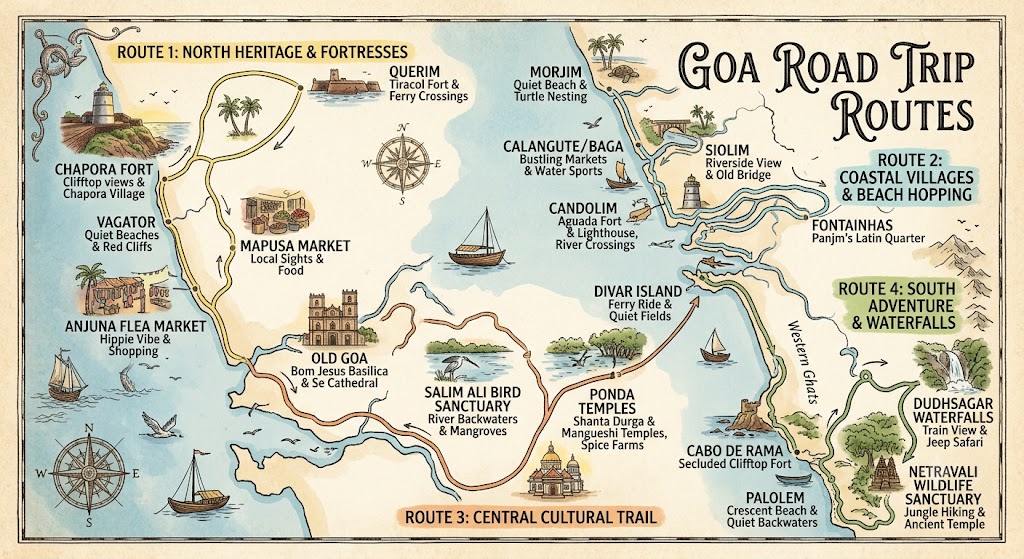
A Goa road trip offers much more than travelling from one popular beach to another. The most rewarding routes pass through coconut-lined villages, old bridges, river islands, historic forts, quiet beaches, forest roads and waterfall regions.
The key is to divide Goa into practical travel zones. Trying to visit Fort Aguada, Palolem, Divar Island and Dudhsagar Falls in one day creates more driving than enjoyment. A better plan is to explore North Goa, inland Goa, South Goa and the eastern forest region on separate days.
This Goa travel guide presents realistic Goa road trip routes covering beaches, villages, forts and waterfalls. Each route can be followed independently or combined into a longer Goa itinerary.
GoaOrbit can help travellers compare attractions, understand regional differences and select routes based on their interests, accommodation area and available time.
Why Explore Goa by Road?
Goa’s famous attractions are spread across the coast, river valleys and inland countryside. A road trip allows travellers to stop at smaller villages and scenic areas that may not fit into standard sightseeing tours.
A well-planned road journey provides opportunities to:
- Visit beaches with different atmospheres
- Explore traditional coastal and inland villages
- Combine forts with nearby viewpoints
- Discover local bakeries and restaurants
- Travel through fields, rivers and forest landscapes
- Spend more time at quieter destinations
- Change plans according to weather and road conditions
- Avoid returning to the same base after every short stop
A rented car is generally more comfortable for families and longer routes. A scooter or motorcycle may suit experienced riders travelling light, but long distances, afternoon heat and monsoon rain can make two-wheeler journeys tiring.
Quick Comparison of Goa Road Trip Routes
| Route | Main Highlights | Suggested Time | Best Starting Area |
|---|---|---|---|
| North Goa Coastal Route | Aguada, Vagator, Chapora, Ashwem, Mandrem | 1–2 days | Panaji, Candolim or Calangute |
| Divar and Arvalem Route | River island, villages, lake and waterfall | 1 day | Panaji or Old Goa |
| South Goa Coastal Route | Benaulim, Cavelossim, Cabo de Rama, Agonda | 2 days | Margao or Colva |
| Dudhsagar Forest Route | Mollem, forest scenery and Dudhsagar Falls | 1 full day | Ponda, Margao or Panaji |
| Sanguem Nature Route | Rural villages and guided waterfall trails | 1 full day | Margao or Ponda |
These are planning suggestions rather than fixed tour routes. Driving time will change with traffic, ferry queues, weather, roadwork and the length of each stop.
Route One: North Goa Beaches and Forts Road Trip
Suggested Route
Panaji → Reis Magos → Fort Aguada → Candolim → Anjuna → Vagator → Chapora Fort → Morjim → Ashwem → Mandrem
This route combines some of the best-known places to visit in North Goa with quieter coastal areas. It works as one long day for travellers who make short stops, but two days provide a far more relaxed experience.
Reis Magos and the Mandovi River
Begin near the Mandovi River and travel toward Reis Magos. This section provides river scenery before the road becomes busier near Candolim and Sinquerim.
Travellers primarily interested in beaches may skip this stop and begin directly with Fort Aguada.
Fort Aguada and Sinquerim
Fort Aguada stands on the Sinquerim headland and represents one of Goa’s best-preserved Portuguese fortifications. Vehicles can use the road from the Sinquerim side, while a separate shorter route involves a steep climb. (Goa Tourism)
Allow time to walk through the public fort area and enjoy the surrounding coastal views. Check current opening arrangements before travelling, as access to certain structures and sections may differ.
After visiting the fort, continue toward Sinquerim or Candolim Beach for breakfast or a short coastal walk.
Candolim to Anjuna
The road through Candolim and Calangute can become busy, particularly during weekends and peak travel periods. Start early and avoid adding too many commercial stops if your main goal is scenic driving.
Anjuna provides cafés, coastal viewpoints and access to neighbouring Vagator. Market schedules and special events vary, so confirm them separately rather than building the entire route around an assumed market day.
Vagator and Chapora Fort
Vagator forms a curved coastal bay below Chapora Fort. The fort stands above the Chapora River basin and provides views across Vagator, the river and surrounding coastline. (Goa Tourism)
The climb can feel uncomfortable during the hottest part of the day. Visit in the morning or later afternoon, wear suitable footwear and carry drinking water.
Avoid standing on unsafe walls or crossing barriers for photographs.
Morjim, Ashwem and Mandrem
Continue north across the Chapora River toward Morjim, Ashwem and Mandrem. This section becomes calmer than the crowded Calangute–Baga belt.
Ashwem lies along the northern coastal stretch beyond the Chapora River and is known for its quieter setting and palm-fringed shoreline. The official tourism description recommends the October-to-March travel period and warns that monsoon seas can become rough with dangerous undercurrents. (Goa Tourism)
End the day in Mandrem or Ashwem rather than driving back across North Goa immediately after sunset.
Optional Extension to Tiracol
Travellers with another half-day can continue toward Querim and the Tiracol River. Fort Tiracol stands at Goa’s northern edge and overlooks the meeting area of the river and sea. Current entry conditions should be checked because the heritage property and church operate within the fort complex. (Goa Tourism)
Best for
- First-time Goa visitors
- Friends and couples
- Fort and landscape photography
- Beach cafés and coastal drives
- Travellers staying in North Goa
Route Two: Divar Island, Villages, Lake, and Arvalem Waterfall
Suggested Route
Panaji → Ribandar → Divar Island → Old Goa → Mayem Lake → Arvalem Falls → Sanquelim
This route presents a quieter side of Goa through ferry travel, traditional villages and inland nature.
Ribandar and the Divar Ferry
Drive from Panaji toward Ribandar and use the ferry to reach Divar Island. Divar is known for green fields, Indo-Portuguese homes and peaceful village surroundings. It is not connected to the mainland by a conventional road bridge, making the ferry part of the experience. (Goa Tourism)
Ferry frequency, vehicle capacity and service conditions can change. Check locally before travelling and allow extra time for queues.
Exploring Divar Island
Travel slowly through the island and use only public roads. The attraction is not a single monument but the complete landscape of homes, churches, fields, river views and quiet neighbourhoods.
Avoid entering fields, private courtyards or residential properties without permission. Keep music low and do not block narrow village roads while taking photographs.
Old Goa Heritage Stop
Return by ferry and continue toward Old Goa. Travellers can stop near the Basilica of Bom Jesus and other heritage buildings after confirming current visiting hours. The Basilica is recognised as a World Heritage monument. (Goa Tourism)
This stop can be shortened when the main purpose of the day is reaching the waterfall before afternoon weather changes.
Mayem Lake
Continue toward the Bicholim region and stop near Mayem Lake. The lake is surrounded by inland greenery, and Goa Tourism identifies Arvalem Waterfall, Sanquelim and nearby religious sites as part of the broader area. (Goa Tourism)
Use this as a short rest stop rather than trying to include every available activity.
Arvalem Waterfall and Caves
Arvalem, also called Harvalem, is among Goa’s more accessible waterfall destinations. The waterfall is near Sanquelim, with Arvalem Caves and Rudreshwar Temple located nearby. It is strongest during the monsoon and immediately afterwards, while water flow may reduce considerably during drier months. (Goa Tourism)
Stay inside designated viewing areas. Rocks, paths and steps can become slippery during rain.
Best for
- Families
- Village and cultural travel
- Photography
- Travellers wanting a manageable waterfall visit
- Visitors staying in Panaji or Old Goa
Route Three: South Goa Villages, Beaches, and Cabo de Rama
Suggested Route
Margao → Benaulim → Varca → Cavelossim → Betul → Cabo de Rama → Agonda → Palolem → Patnem
This is one of the best routes for travellers who want quieter places to visit in South Goa. It should ideally be divided across two days.
Benaulim
Begin in Benaulim, south of Colva. The village combines a fishing beach with local handicrafts, traditional homes, churches and neighbourhood restaurants. Goa Tourism describes it as calmer than nearby Colva, although it can become busier during evenings and weekends. (Goa Tourism)
Stop for breakfast before continuing through the South Goa countryside.
Varca, Cavelossim and Mobor
Varca, Cavelossim and Mobor form a quieter coastal belt south of Benaulim. These destinations combine beaches, village roads, resorts and access to the Sal River area. (Goa Tourism)
Instead of visiting all three beaches separately, select one for a longer walk. Repeatedly parking, walking to the shore and returning to the road can consume much of the day.
Betul Village
Continue toward Betul, a fishing settlement near the Sal River. The surrounding roads provide village scenery and a stronger connection to working coastal life than the resort areas.
Observe fishing activity respectfully. Do not handle nets, equipment or boats, and ask permission before photographing workers.
Cabo de Rama Fort
Cabo de Rama stands on a coastal bluff in the Canacona region, around 16 kilometres north of Agonda. The fort offers wide views but limited protection from changing weather, and official guidance advises caution during the monsoon because of sudden rain and limited shelter. (Goa Tourism)
The road includes rural sections, bends and occasional uneven surfaces. Complete the drive during daylight and avoid cliff edges during strong wind or rain.
Agonda
Agonda is a long, palm-fringed cove south of Cabo de Rama. It provides a peaceful stopping point after the fort and works well as an overnight base. (Goa Tourism)
Although Agonda is often included among the best beaches in Goa for quiet stays, swimming conditions can change. Follow lifeguard instructions and avoid entering deep water without local safety guidance.
Palolem and Patnem
Continue the next morning toward Palolem, a sheltered-looking curved bay between headlands, before finishing at quieter Patnem. (Goa Tourism)
Patnem is located near Palolem and is valued for its quieter atmosphere. Official guidance still recommends following lifeguard instructions because undertows can occur even when the sea appears manageable. (Goa Tourism)
Optional Deep-South Extension
Travellers with more time may continue toward Galgibaga. Part of the beach is protected for Olive Ridley turtle nesting, so visitors must respect restricted areas and avoid disturbing the natural environment. (Goa Tourism)
Best for
- Couples and families
- Slow coastal travel
- Village food and quiet beaches
- Fort photography
- Travellers seeking peaceful overnight stays
Route Four: Mollem and Dudhsagar Waterfall Road Trip
Suggested Route
Ponda or Margao → Mollem → Authorized Dudhsagar Access Point → Return through Rural Eastern Goa
Dudhsagar should be planned as a dedicated full-day trip rather than being added to a beach itinerary.
Reaching the Mollem Region
Start early and drive toward Mollem. The surrounding eastern region changes the appearance of Goa, replacing coastal development with forested hills and rural settlements.
Private road vehicles generally do not complete the entire waterfall experience independently. Visitors may need an authorised trek, transport arrangement or another approved access system depending on season and regulations.
Visiting Dudhsagar Falls
Dudhsagar is a four-tiered waterfall within the Bhagwan Mahavir Wildlife Sanctuary region. Goa Tourism describes it as approximately 1,017 feet high. (Goa Tourism)
Goa’s tourism and forest authorities have introduced an online system for organised Dudhsagar trekking. Availability, permitted routes, daily capacity and seasonal access can change, so travellers should verify the latest official arrangement before leaving. (Goa Tourism)
Do not walk along railway tracks or use an unauthorised forest route. Carry identification, water and appropriate footwear, and follow the instructions of guides and forest personnel.
Best for
- Nature and adventure travellers
- Forest landscapes
- Full-day excursions
- Visitors comfortable with organised access
- Post-monsoon scenery
Route Five: Sanguem Villages and Guided Waterfall Trails
Suggested Route
Margao or Ponda → Sanguem → Verlem or Approved Meeting Point → Guided Waterfall Trail
This route is intended for travellers who prefer forest trekking and rural Goa rather than easy roadside sightseeing.
Sanguem includes remote natural areas and access regions associated with Savari and Mainapi waterfalls. Goa Tourism describes the taluka as a long but scenic inland drive leading toward rural landscapes, historic structures and forest areas. (Goa Tourism)
An organised Mainapi itinerary listed through Goa Tourism involves a trek from Verlem through the Netravali sanctuary area. The published itinerary describes a demanding journey lasting several hours, meaning it should not be treated as a quick roadside stop. (Goa Tourism)
Availability may depend on weather, forest permissions and authorised operators. Do not attempt remote waterfall routes without confirming current access.
Best for
- Experienced walkers
- Guided nature travel
- Rural scenery
- Travellers interested in Western Ghats landscapes
- Visitors with an entire day available
Suggested Five-Day Goa Road Trip Itinerary
Day One: Fort Aguada, Candolim, and Chapora
Begin at Fort Aguada, stop near Candolim and continue through Anjuna to Vagator.
Visit Chapora Fort later in the day and stay near Vagator, Morjim or Ashwem.
Day Two: Morjim, Ashwem, Mandrem, and Tiracol
Spend the morning along the quieter northern beaches.
Continue toward Querim and Tiracol when ferry conditions and access arrangements allow. Return before the roads become difficult to navigate after dark.
Day Three: Divar Island and Arvalem
Take the morning ferry to Divar and explore the island slowly.
Continue through Old Goa toward Mayem Lake and Arvalem Waterfall. Stay near Panaji, Ponda or Margao.
Day Four: Benaulim, Cavelossim, and Cabo de Rama
Begin in Benaulim and drive through Varca and Cavelossim.
Continue toward Betul and Cabo de Rama before staying overnight in Agonda.
Day Five: Agonda, Palolem, and Patnem
Enjoy a quiet morning at Agonda.
Continue toward Palolem and Patnem. Travellers with additional days can schedule Dudhsagar as a separate full-day trip rather than adding it to this already long itinerary.
Best Time for a Goa Road Trip
The best time to visit Goa for a coastal road trip is generally from October to March, when outdoor conditions are usually more comfortable and beach services are more active. December and January can bring heavier traffic, higher accommodation demand and crowded parking areas. (Goa Tourism)
Waterfalls are usually strongest during the monsoon and immediately afterwards. However, heavy rain also creates slippery paths, rough seas, reduced visibility, fallen branches and changing forest-access rules. Arvalem is at its strongest in the monsoon, while Cabo de Rama has limited shelter during sudden rain. (Goa Tourism)
Summer journeys should begin early. Avoid long fort climbs and exposed coastal viewpoints during the hottest afternoon hours.
Choosing the Right Vehicle
Rental Car
A car is suitable for families, groups, luggage and longer routes to South or eastern Goa.
Check insurance, fuel policy, tyre condition, lights and existing damage before accepting the vehicle.
Scooter or Motorcycle
A two-wheeler can be convenient for short coastal trips and narrow village roads.
It may be unsuitable for inexperienced riders, heavy rain, long waterfall journeys or travellers carrying large bags.
Taxi with Driver
A taxi works well for visitors who do not want to navigate unfamiliar roads.
Agree on the route, waiting time, parking charges and total pricing before departure.
Public Transport
Buses can reach many towns and larger villages but may not connect remote beaches, forts and waterfalls conveniently within one day.
Public transport is more practical for slow travel than for a tightly planned multi-stop road trip.
Road Trip Budget Categories
The total cost depends on travel season, vehicle type and distance. Plan for:
- Vehicle rental or taxi charges
- Fuel
- Parking
- Ferry crossings where applicable
- Fort or attraction entry charges
- Forest permits and authorised guides
- Food and drinking water
- Accommodation
- Emergency transport
- Water sports in Goa, when included separately
Prices, ticket systems and access charges can change. Confirm them close to your travel date rather than relying on an older blog or social media post.
Important Driving and Safety Tips
Start early and complete unfamiliar rural routes before dark. Navigation apps may suggest narrow shortcuts through villages, fields or poorly maintained roads.
Keep these points in mind:
- Wear helmets on two-wheelers
- Carry a valid driving licence
- Never drink and drive
- Reduce speed on village roads
- Expect pedestrians, animals and sharp bends
- Keep fuel available before inland journeys
- Download an offline map
- Carry a charged phone and power bank
- Do not leave valuables visible inside a parked vehicle
- Follow ferry and forest staff instructions
- Avoid stopping in the middle of bridges or narrow roads
- Postpone cliff and waterfall visits during severe weather
Goa nightlife can be enjoyed after completing a road trip, but travellers should use a designated driver or arrange safe transport instead of driving after consuming alcohol.
Responsible Road Travel in Goa
Road trips pass through communities where people live, work, worship and travel daily. Treat villages as residential areas rather than open tourist sets.
Avoid loud music, unnecessary horn use and careless parking. Purchase food or products from local businesses where practical, but do not pressure residents for photographs or access to private properties.
At beaches and waterfalls:
- Carry all waste back with you
- Avoid single-use plastic where possible
- Do not feed wildlife
- Stay out of nesting areas
- Respect religious places
- Avoid picking plants or removing stones
- Do not enter waterfalls during unsafe flow
- Never leave bottles or food packaging beside the road
Common Goa Road Trip Mistakes
Covering North and South Goa on the Same Day
The route may look manageable on a map, but traffic and repeated stops make the journey exhausting.
Adding Dudhsagar to a Coastal Sightseeing Day
Dudhsagar requires a separate plan because access arrangements, forest travel and waiting time can consume most of the day.
Ignoring Ferry Timings
Island and river routes may depend on ferries. Missing a service can change the entire itinerary.
Following Every Navigation Shortcut
Some suggested roads may be extremely narrow, poorly surfaced or unsuitable during rain.
Visiting Too Many Beaches
Five nearby beaches may offer less value than spending meaningful time at one beach and one village.
Driving Only After Sunset
Night driving can hide potholes, animals, pedestrians and unmarked turns, particularly in rural areas.
How GoaOrbit Helps Plan a Better Road Trip
GoaOrbit helps travellers identify the best places to visit in Goa and organise them into practical regional routes.
Visitors can compare places to visit in North Goa with places to visit in South Goa, explore the best beaches in Goa and find suitable things to do in Goa along each driving route.
The platform can also help travellers plan around:
- The best time to visit Goa
- Short and extended Goa itineraries
- Beach and village experiences
- Forts and heritage locations
- Waterfall regions
- Accommodation areas
- Water sports and local activities
- Travel budgets and transportation
A carefully organised Goa itinerary reduces unnecessary travel and provides more time to enjoy each destination.
Frequently Asked Questions
1. How many days are needed for a complete Goa road trip?
Five to seven days allow travellers to cover North Goa, central villages, South Goa and one waterfall route comfortably. A three-day trip should focus on only two regions.
2. Which Goa road trip route is best for first-time visitors?
The North Goa route from Fort Aguada to Chapora and Mandrem provides a balanced introduction to beaches, forts and coastal settlements. It is easier when divided over two days.
3. Can South Goa beaches and Dudhsagar be visited on the same day?
It is not recommended. Dudhsagar access and forest travel can require most of a day, while South Goa’s coastal route deserves separate time.
4. Is a scooter suitable for all Goa road trip routes?
A scooter may work for short coastal journeys, but a car is usually more comfortable for Dudhsagar gateways, Sanguem, deep South Goa and travel during rain.
5. Which Goa route combines villages and a waterfall?
The Divar Island, Mayem and Arvalem route combines ferry travel, village landscapes, inland roads and an accessible waterfall area.
6. What is the best road trip for quiet beaches?
The South Goa route through Benaulim, Varca, Cavelossim, Agonda and Patnem offers several peaceful coastal stops and village experiences.
7. Is Dudhsagar accessible throughout the year?
Access depends on weather, forest regulations and the authorised transport or trekking system. Travellers should verify current official availability before planning the journey.
8. Is monsoon a good season for a Goa road trip?
The monsoon creates green landscapes and stronger waterfalls, but it also brings slippery roads, rough seas and possible access restrictions. Drive slowly and keep plans flexible.
9. Can Divar Island be included in a self-drive itinerary?
Yes. Vehicles can use the ferry when service and capacity permit. Allow additional time and confirm the latest ferry arrangements locally.
10. Should accommodation be changed during a multi-day road trip?
Using separate bases in North Goa, central Goa and South Goa can reduce repeated driving. Travellers with limited luggage may find this more convenient than returning to one location daily.
Conclusion
The best Goa road trip routes connect very different landscapes within a relatively small region. North Goa combines forts, busy coastal settlements and quieter northern beaches. Central Goa provides river islands, heritage areas and village scenery, while South Goa offers peaceful beaches, fishing communities and dramatic coastal forts.
Eastern Goa creates another experience through forests, rural roads and waterfalls such as Dudhsagar and Arvalem.
Instead of attempting everything in one rushed trip, divide Goa into clear travel zones. Start early, leave space for unplanned stops and confirm current ferry, fort, forest and waterfall access before departure.

